What Is a Wall Washer Light? Types, Uses & Benefits Explained
Most people notice when a building looks striking at night. What they don’t notice is the lighting doing the work. Wall washer lights are usually responsible — designed not to illuminate a room but to wash a surface evenly with light, making walls, facades, and architectural features read clearly without visible hot spots or harsh contrast.
It’s a specific tool for a specific job. And once you understand what it does, you start seeing it everywhere — hotel lobbies, museum galleries, retail storefronts, building exteriors, landscaped gardens. The effect looks effortless. The engineering behind it isn’t.
This guide covers what wall washers actually are, the different types available, where they’re used, and what to look for before specifying one.
What Is a Wall Washer Light?
This type of fixture is engineered to project light at a low angle across a vertical surface — evenly, from top to bottom or side to side — with minimal shadowing and no visible bright patches.
The key distinction from a standard spotlight is the beam shape. This type of fixture uses an asymmetric reflector or lens that throws light in one direction, spreading it smoothly across a surface rather than creating a focused circle on it. The result is a uniform wash of light that reveals texture, depth, and colour in the surface being lit.
A well-specified fixture doesn’t draw attention to itself. It disappears. The surface glows. That’s the intended effect, and it’s harder to achieve than it sounds.
Types of Wall Washer Lights
Not all of these fixtures are built the same. The right type depends on the application, the surface material, the mounting position, and whether the installation is indoor or outdoor.
The LED Wall Washer Light is the most popular design choice. LED lights rely on energy-efficient diodes for consistent and durable output with varying color temperatures. The use of LEDs offers many benefits over other types of lights that have been available before. They operate at lower temperatures than their predecessors, halogens or fluorescents, and their output lasts longer. Moreover, they provide better accuracy of color, which is an essential component in lighting up natural surfaces such as stone, wood, or textile materials.
They may include dimming and DALI or DMX controls which, in turn, means that they may be controlled in accordance with the changing requirements of the space such as those typical for hotels or office spaces.
The Linear Wall Washer Light Also called the continuous-run wall washer. This lighting format includes elongated linear lamps either mounted on the ground or ceiling, as well as recessed into tracks or coves. Its advantage is a homogeneous, consistent wash of illumination without any gaps and shadows. It will suit best those spaces in which point-source fixtures will cause obvious differences in intensity.
Such spaces include long corridors, feature walls, large areas where the lighting has to be consistent to highlight the displayed objects, etc.
Exterior Wall Washer An exterior wall washer is built for outdoor exposure. The critical specification here is the IP (Ingress Protection) rating — most exterior applications require at least IP65, which means the fixture is dust-tight and protected against water jets. IP67 or IP68 is required for fully submerged or ground-level installations.
Beyond protection, these fixtures need to maintain optical performance across temperature extremes. A fixture that looks good in a test environment and shifts colour temperature or loses output after a monsoon season isn’t fit for purpose.
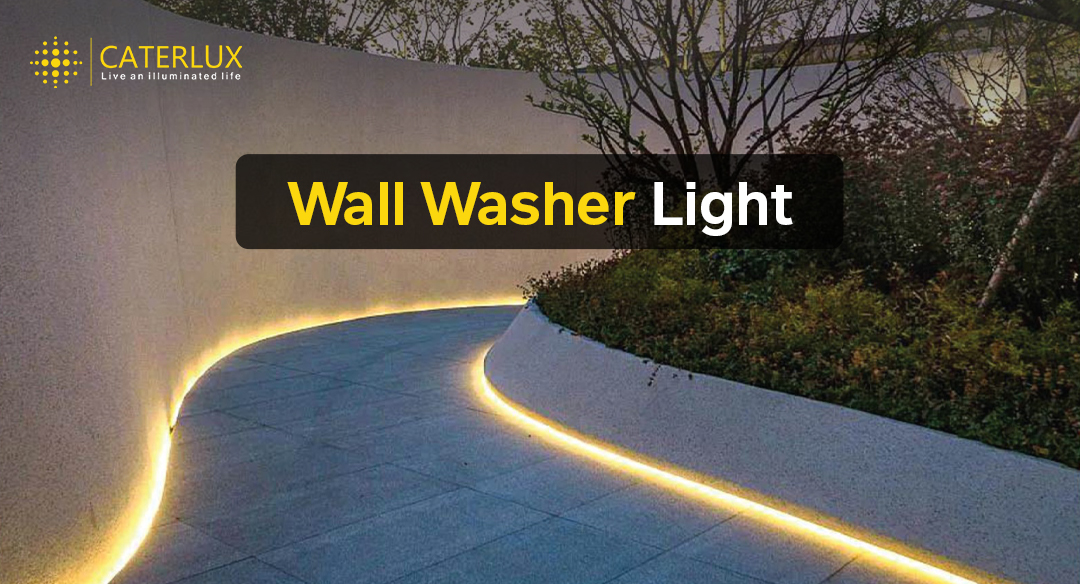
Wall Washer Outdoor (Landscape and Facade) Fixtures used for facade or landscape illumination typically sit at ground level or are surface-mounted on nearby structures. They’re designed to graze or flood vertical surfaces — stone walls, building elevations, garden screens, water features — with controlled light that enhances the architecture after dark without creating light pollution or glare for passersby.
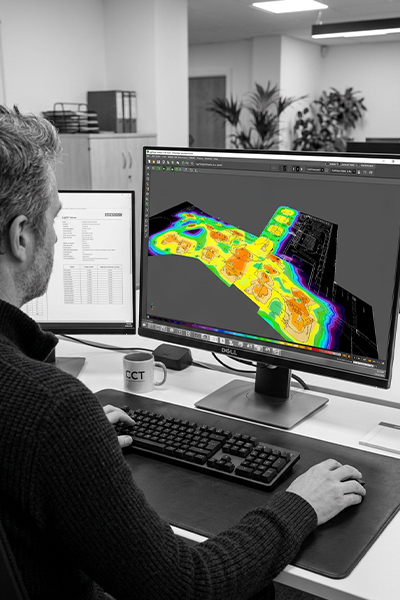
The mounting distance from the surface affects coverage and uniformity. Most manufacturers publish photometric data showing how light distributes at different throw distances — worth reviewing before specifying.
Where Are Wall Washers Used?
The application list is wider than most people expect.
Retail and Commercial Spaces – Product walls, display shelving, and feature walls behind sales counters. Proper illumination not only enhances the appearance of goods but gives it an intentional touch.
Hospitality Industry – Hotel lobbies and corridors, feature walls in restaurants, spa treatments areas. Wall wash fixtures give off an intentional feel rather than a merely illuminated one through the creation of ambient depth in the spaces.
Art Galleries and Museums – Paintings, sculpture, other artwork and artifacts benefit from high CRI wall washing that shows surface detail while not creating any hot spots or harmful UV rays.
Corporate Offices – Accent illumination of brand walls and other reception or conference rooms. An illuminated brand background is always a significant improvement over an unlit one.
Building Façade Lighting – Elevations of buildings lit either from the ground level or from within the building itself. The exterior illumination creates how a building looks like at night and is the main method lighting designers use when lighting commercial buildings.
Landscape Architecture – Landscape structures like boundary walls, garden screens and retaining walls can be effectively illuminated to extend the usability of the site and enhance its nighttime aesthetic appeal.
Advantages of Wall Washer Lighting
Uniform illumination without hotspots. A well-designed wall washer distributes light evenly across a surface. No bright centre, no dark edges — just consistent output that lets the surface material do the talking.
Enhances texture and depth. Grazing light — light projected at a shallow angle across a surface — reveals texture that flat, overhead lighting completely flattens. Stone, brick, timber, and textured plaster all look dramatically different under wall washing than under standard ambient light.
Energy efficiency. LED versions consume significantly less energy than older technologies while delivering equivalent or superior lumen output. For commercial buildings where exterior or large-area lighting runs for extended hours, the reduction in operating cost is real.
Architectural definition. Lighting a building’s facade or a key interior surface draws the eye, creates hierarchy, and gives a space a visual anchor. Without it, surfaces just exist. With it, they become part of the design.
Flexible control. Modern LED fixtures support dimming, colour tuning, and integration with smart lighting control systems. This means the same fixture can produce a warm, intimate evening atmosphere and a bright, neutral daytime setting — without changing hardware.
How to Choose the Right Wall Washer?
A few things matter more than others when specifying wall washers.
IP rating for the environment. Outdoor and wet-area applications need proper ingress protection. Don’t install a fixture rated for dry interiors in an exposed exterior position — the failure is a matter of when, not if.
Beam angle and throw distance. The relationship between how far the fixture sits from the wall and how wide the beam spreads determines coverage. Review the photometric data for any fixture before committing — manufacturers like Caterlux publish this for their products so you can verify actual performance rather than relying on general descriptions.
Colour rendering index (CRI). For retail, gallery, and hospitality applications, CRI matters. A CRI of 90+ ensures that surface colours — including paint finishes, fabrics, and materials — appear accurate rather than washed out or shifted.
Colour temperature. Warm white (2700K–3000K) suits hospitality and residential applications. Neutral white (4000K) is typical for offices and retail. Exterior facade lighting varies widely depending on the building material and the visual effect being pursued.
Dimming compatibility. If the fixture will be integrated into a control system, confirm compatibility before specifying. DALI and 0–10V dimming are the most common standards — confirm compatibility before purchasing.
Brand and support. Architectural lighting fixtures are long-term investments. A brand with documented photometric data, warranty support, and local availability matters more than the one with the lowest unit price.
Caterlux designs and manufactures architectural LED lighting in India — including wall washer solutions for interior and exterior applications — and works directly with architects and lighting designers on project specification. Their range is available atcaterlux.in.
Conclusion
A wall washer light does one thing well: it makes surfaces look intentional. Whether that’s a hotel corridor wall, a retail feature, a building facade, or a garden boundary — the right fixture, specified correctly, transforms how a space reads after dark.
The differences between fixture types matter. Indoor versus outdoor, linear versus point-source, high CRI versus standard — these aren’t details to sort out after purchase. They’re decisions that determine whether the result looks like a deliberate design choice or a lighting job that almost worked.
Get the specification right first. The effect follows.