Street Light Guide: Types, Wattage, Price & Everything You Need to Know
Street lights are everywhere and most people never think about them — until one fails and suddenly a road feels unsafe, a colony gets complaints, or a housing society gets a maintenance bill nobody expected. Whether you’re specifying for a new township, replacing old sodium vapour fittings on a colony road, or simply looking for a street light for home boundary walls and driveways, the choices have changed significantly in the last few years.
LED street lights have replaced almost everything that came before them — not because of a mandate but because the numbers don’t lie. Less power, longer life, better visibility, lower maintenance. The market has moved and it’s not going back.
This guide covers what street lights are, how they’re classified, which wattage suits which application, what LED street light price looks like in India, how to choose the right street light pole, and why Caterlux is the name that keeps coming up for serious projects.
What Is a Street Light?
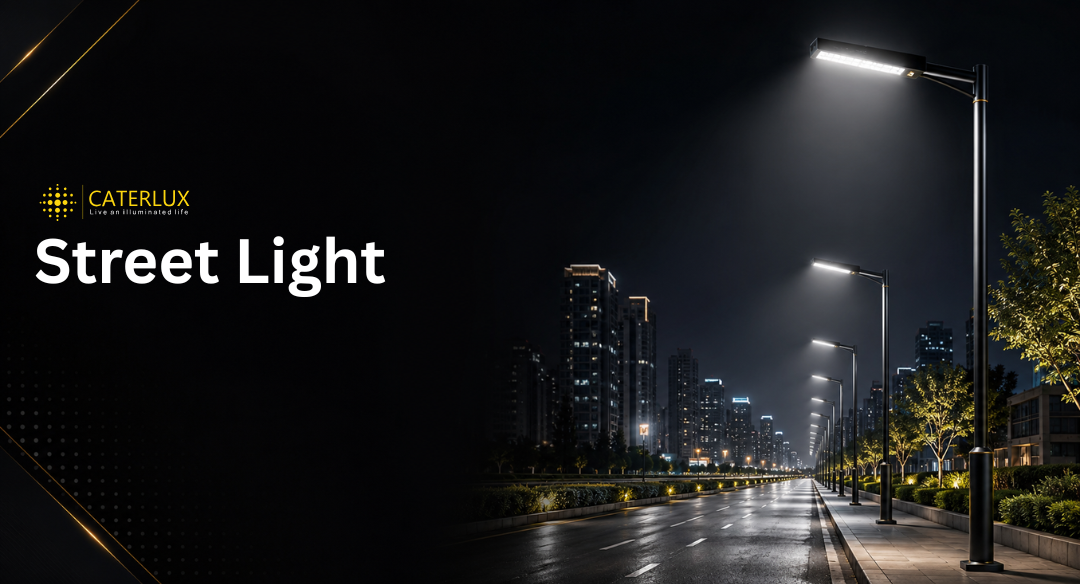
A street light is an outdoor lighting fixture mounted on a pole or wall bracket, designed to illuminate roads, pathways, parking areas, campuses, and outdoor spaces after dark. The purpose is straightforward — visibility and safety. But the technology inside the fitting, the optics that control where the light goes, and the quality of the components determine how well it actually does that job over time.
Traditional street lights used sodium vapour lamps — those orange-toned lights you still see on older highways. Before that, mercury vapour. Both consume significant power and degrade noticeably in output over their lifespan. Neither is being installed anywhere anymore.
LED street lights work differently. The LED module produces light directly from a semiconductor, which is far more efficient than producing heat and then converting that to light (which is what older lamp technologies essentially do). A 100 watt LED street light produces roughly the same or more usable light on the road as a 250W sodium vapour fitting. That efficiency difference is why the shift happened so fast.
Types of Street Lights
Not all street lights are the same category of product. Here’s how they break down:
Road and Highway Street Lights The standard category — mounted on poles along roads, highways, and expressways. These are typically high-wattage fittings (80W to 200W and above) with asymmetric optics designed to throw light along the road surface rather than straight down. The optic design is what separates a proper road light from a general outdoor fitting.
Area Lighting / Flood-style Street Lights Used for parking lots, industrial yards, sports facilities, and open campus areas. The optic here is wider and more symmetric — the goal is even illumination across a large flat area rather than a directed road beam.
Street Light for Home Use A growing category. Colony roads, housing society driveways, boundary wall lighting, garden pathways. These applications don’t need the high wattage of highway fittings — 30W to 60W is typically adequate. A street light for home use also needs to look considered alongside the architecture, not just functional.
Solar Street Lights Integrated solar panel, battery, LED, and controller in one unit. Works well in locations where grid connection is impractical or expensive. The limitation is battery performance over years and output consistency in areas with limited sun hours.
Smart Street Lights Standard LED fittings with an added controller that allows remote dimming, motion sensing, fault detection, and network management. Increasingly specified for smart city projects, large campuses, and municipalities wanting to manage energy consumption intelligently.
Street Light Wattages — Which One for Which Application
Getting wattage right is important because both underspecification and overspecification cost money. Too low and the road is under-illuminated. Too high and you’re paying for light that serves no purpose.
| Wattage | Mounting Height | Application | Lumen Output (Approx.) |
| 30W | 4 to 6 metres | Colony paths, driveways, garden access | 3,000 to 3,600 lm |
| 50W | 5 to 7 metres | Society roads, parking lots, campus paths | 5,000 to 6,000 lm |
| 80W | 6 to 8 metres | Urban secondary roads, industrial yards | 8,000 to 9,600 lm |
| 100W | 7 to 9 metres | Main urban roads, arterial roads | 10,000 to 12,000 lm |
| 150W | 8 to 10 metres | Highways, large parking areas, toll plazas | 15,000 to 18,000 lm |
| 200W | 10 to 12 metres | Expressways, industrial zones, stadiums | 20,000 to 24,000 lm |
The 100 watt LED street light is the most commonly specified wattage for urban road applications in India. It sits at the right intersection of output, cost, and energy consumption for most municipal and residential project requirements. A 100W LED street light at a 8-metre mounting height with the right optic gives good road illumination across a 20 to 25 metre span between poles.
LED Street Light: Why the Switch Makes Sense
If you’re still running sodium vapour or metal halide fittings anywhere, the comparison is worth doing honestly.
Energy savings are real and significant. A 100 watt LED street light replaces a 250W sodium vapour fitting with equal or better road illumination. That’s a 60% reduction in power consumption per fitting. Across 100 fittings running 12 hours a night, that’s a meaningful annual saving on the electricity bill.
Lifespan is genuinely longer. A quality LED street light runs 50,000 hours or more before requiring replacement. Sodium vapour lamps typically last 15,000 to 24,000 hours and degrade noticeably in output through their lifespan. LEDs maintain their output much more consistently.
Maintenance costs drop. Fewer lamp replacements. Less bucket truck time. Less labour. For large installations — municipal roads, housing societies, industrial campuses — the maintenance savings over a 5-year period is often larger than the additional upfront cost of quality LED fittings.
Light quality is better. LED street lights have a colour rendering index (CRI) of 70 or above. Sodium vapour has a CRI of around 25. That means objects, faces, and vehicles look like their actual colour under LED light — relevant for CCTV footage quality and for how safe a road actually feels at night.
IP65 and above rated. Quality LED street lights carry an IP (Ingress Protection) rating of IP65 or IP66 — fully protected against dust and rain. India’s monsoons are not gentle and the fitting needs to handle them without water ingress for years.
Street Light Pole: What You Need to Know
The street light pole is what the fitting mounts on, and it’s not an afterthought. The pole height, material, wall thickness, bracket design, and foundation requirement all affect how the system performs.
Standard pole heights in India:
- 4 to 6 metres for pathways, driveways, colony access roads
- 6 to 8 metres for urban secondary roads and parking areas
- 8 to 10 metres for main roads and arterial roads
- 10 to 12 metres for highways and expressways
Materials: Most street light poles in India are mild steel or galvanised steel. Galvanised poles last significantly longer in humid and coastal environments. Stainless steel poles are used in premium decorative applications.
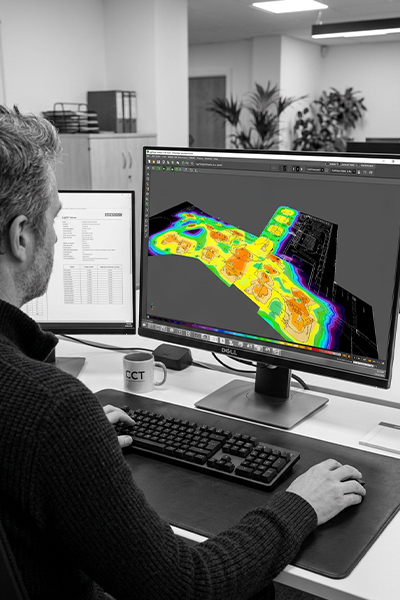
Bracket design matters for the optic to work properly. The outreach (how far the bracket extends over the road) and the tilt angle of the fitting are part of the photometric design of the installation. Changing these without recalculating the layout affects uniformity on the road surface.
For a street light for home boundary or driveway use, smaller decorative poles at 3 to 5 metres with an appropriate bracket are both functional and architecturally considered.
LED Street Light Price in India — What to Expect
LED street light price in India varies based on wattage, optic quality, driver quality, housing material, certifications, and brand.
| Wattage | Price Range (Per Fitting) |
| 30W LED Street Light | ₹1,200 to ₹2,500 |
| 50W LED Street Light | ₹1,800 to ₹3,500 |
| 80W LED Street Light | ₹2,500 to ₹5,000 |
| 100W LED Street Light | ₹3,000 to ₹6,500 |
| 150W LED Street Light | ₹4,500 to ₹9,000 |
| 200W LED Street Light | ₹6,000 to ₹14,000 |
A 100 watt LED street light in the mid-range typically costs ₹3,500 to ₹5,000. BIS-certified, IP65-rated fittings with quality drivers sit toward the upper end of that range.
The reason driver quality matters so much in LED street light price discussions is the same reason it matters in indoor LED — the driver is what converts mains AC power to the DC voltage the LED needs. Indian street voltage fluctuates. Cheap drivers fail. When a driver fails in a street light fitting mounted 8 metres up, the replacement cost including labour often exceeds what was saved buying the cheaper fitting in the first place.
Why Caterlux for LED Street Lights
Caterlux has built its reputation as a Make in India architectural lighting brand since 2016 — and the street light range reflects the same manufacturing standards that define their indoor product line.
Certifications that actually mean something. Caterlux LED street lights carry BIS (ISI Mark), CE, RoHS, and LM79/LM80 certifications. LM79 and LM80 are specifically relevant to street lighting — they’re the photometric and lumen maintenance test standards that determine actual output and how output holds up over 50,000 hours. Very few Indian LED street light manufacturers carry LM79/LM80 verification.
Optics designed for actual road illumination. The difference between a street light with proper road optics and one with a generic flood-style distribution is visible on the road surface — uniform coverage versus bright patches and dark patches between poles. Caterlux fittings use optical designs that meet road lighting uniformity standards.
Smart city ready. Caterlux street lights are designed for integration with motion sensors, daylight harvesting controls, and IoT-based management systems. For housing society and municipal projects where remote monitoring and dimming schedules are part of the requirement, the hardware is ready for that integration.
Custom wattages and brackets. Project specifications don’t always match standard catalogue products. Caterlux offers OEM and custom configurations — specific wattages, pole bracket designs, colour temperatures, and voltage ranges — for projects that need it. This is particularly relevant for government tender specifications.
Factory-direct pricing. No distributor margin sitting between the manufacturer and the buyer means the LED street light price is competitive for the specification level. For bulk orders on housing projects, road infrastructure, or campus lighting, this difference is meaningful.
Pan-India supply. Nationwide delivery and a technical team available for project specification support before the order is placed — not just post-sale.
Explore the full Caterlux street light range at caterlux.in or contact the team for a project-specific quote and photometric layout.
Conclusion
LED street lights have made the decision about outdoor road and pathway lighting straightforward — the efficiency, lifespan, and light quality advantages over older technologies are too large to argue against. What still requires careful consideration is which wattage for which application, whether the fitting has the right optics for road use versus area use, and whether the driver and housing quality will actually hold up through years of outdoor operation.
Get those things right and a street light installation pays for itself in energy and maintenance savings within a few years. Get them wrong and you’re back up on a ladder with a replacement fitting sooner than anyone planned.
Caterlux builds street lights the way outdoor lighting should be built — certified to the standards that matter, designed for actual road illumination, and priced at factory-direct rates.
Visit caterlux.in to explore the range or speak to the team about your project.