What Is a Recessed Spotlight? Types, Benefits and Uses Explained
Ever notice how some stores make products look amazing under lights while your home lighting just… exists? That’s the difference between general lighting and targeted lighting. Recessed spotlights give you control over where light goes and what it highlights.
Most homes use basic ceiling lights that flood rooms with even brightness. That’s fine for hallways or bathrooms. But when you want to highlight art on walls, accent architectural features, or create layers of lighting that actually look interesting – that’s when recessed spotlights come in.
Whether you’re lighting a retail space, office, gallery, or home, understanding how recessed spotlights work saves you from installing lights that don’t do what you actually need.
What Exactly is a Recessed Spotlight?
A recessed spotlight sits inside your ceiling or wall, just like regular recessed lights. The difference is focus. While standard downlights spread light evenly across areas, recessed spotlights concentrate light into narrow beams aimed at specific things.
Think of it like the difference between a flashlight and a table lamp. The lamp lights up a room generally. The flashlight points exactly where you’re looking. LED ceiling spotlights work the same way – they create pools of focused light rather than overall illumination.
Most modern recessed spotlights use LED technology. LEDs last 50,000+ hours, use minimal electricity, stay cool enough not to damage what they’re lighting, and come in various LED spotlight colours from warm whites to cool whites depending on what mood you’re creating.
The housing sits above your ceiling line. The trim and lamp show from below. But unlike fixed downlights, recessed spotlights usually rotate and tilt so you can aim the beam where it’s needed.
Recessed Downlight Guide: Everything You Need to Know
Types of Recessed Spotlight by Style and Function
Recessed spotlights come in different configurations depending on what you’re trying to achieve:
Fixed Directional Spotlights
These aim in one direction and stay there. You set the angle during installation. They’re simpler and cost less than adjustable options. Use them when you know exactly what needs highlighting and it’s not moving – like lighting a painting, architectural column, or permanent display.
Fixed recessed spotlights work well in homes where the furniture layout isn’t changing. Point them at your art, they stay pointed at your art.
Adjustable Gimbal Spotlights
These rotate and tilt after installation. The lamp sits in a pivot mechanism – usually 30-40 degrees of movement in any direction. This flexibility is why most commercial spaces use adjustable recessed spotlights.
Retail stores rearranging displays, galleries changing exhibitions, offices reconfiguring spaces – adjustable spotlights adapt without reinstalling fixtures. You just reach up and redirect the beam manually.
Track-Style Recessed Spotlights
Some systems mount multiple spotlight heads on recessed track channels. You get the clean look of recessed lighting with the flexibility of track lighting. Heads slide along the track, rotate, and tilt.
This works when you need several focused beams in one area – like lighting multiple paintings on a gallery wall or highlighting products on retail shelving.
Outdoor LED Spotlights
These need weatherproof housings rated for outdoor use. The sealing protects against rain, dust, and temperature extremes. Outdoor LED spotlights in India specifically need to handle monsoon humidity and intense summer heat.
Use them for lighting building facades, landscape features, architectural details, or security lighting. The focused beams create dramatic nighttime effects on walls, trees, or water features.
Types by Trim Design
The trim is what you actually see from below. Different trim designs control how light comes out and how the fixture looks:
Baffle Trim – Features inner ridges to reduce glare, providing soft, diffused light. The ridges trap stray light inside. Ideal for living rooms and hallways where you want focused lighting without harsh brightness.
Reflector Trim – Uses polished metal interior to maximize light output. The shiny surface bounces every bit of light downward. Perfect for high ceilings and kitchens where you need maximum brightness from each fixture.
Gimbal/Eyeball Trim – Adjustable lights that can pivot to direct the beam. The lamp sits in a ball joint or pivot mechanism. Great for accenting artwork or highlighting specific areas. This is your standard adjustable recessed spotlight trim.
Wall-Wash Trim – Features a specialized half-shield or lens to spread light evenly across vertical surfaces, minimizing shadows. Creates that smooth gradient of light down walls. Makes rooms feel larger by lighting the vertical surfaces rather than just the floor.
READ MORE- LED wall washer light , Gallery lighting , False ceiling light , Decorative led light
Advantages of Using Recessed Spotlights
Accent Lighting That Actually Works – Regular ceiling lights illuminate everything equally, which means nothing stands out. Recessed spotlights create contrast – bright areas and shadowed areas – which is what makes spaces visually interesting.
Flexible After Installation – With adjustable models, rearranging furniture or changing displays doesn’t mean rewiring lights. Redirect the beam and you’re done.
Clean Ceiling Look – No bulky fixtures hanging down cluttering the visual space. LED ceiling spotlights sit flush with the ceiling, keeping that minimalist aesthetic modern spaces want.
Better for Art and Displays – Focused beams mean you light what matters without flooding everything with brightness. Galleries and retail stores depend on this – products and art need highlighting while surrounding areas stay subtly lit.
Works in Low Ceilings – Recessed spotlights don’t drop down like pendant lights or track lighting. In apartments with 8-foot ceilings, that matters. You get powerful focused lighting without making the space feel lower.
Control Over Mood – By choosing where light goes, you control what people focus on and how a space feels. Dramatic? Subtle? Highlighted? You decide through placement and aiming.
Best Magnetic Track Lighting in India| Why Slimmest Magnetic Track Light Wins?
Recessed Spotlight vs Recessed Downlight: What’s the Difference?
People use these terms interchangeably sometimes, but they’re actually different tools:
Recessed Downlights aim straight down with wide beam angles (usually 60-120 degrees). They create even, general lighting across areas. Think of them as ambient lighting – the base layer that makes a room usable.
Recessed Spotlights use narrow beam angles (typically 10-40 degrees) and aim wherever you point them. They create focused pools of light on specific things. Think of them as accent lighting – the layer that adds interest and highlights what matters.
You usually need both. Downlights for overall illumination. Spotlights for creating visual interest and highlighting. A well-lit room combines general lighting with accent lighting rather than relying on just one or the other.
Another difference: downlights stay fixed pointing down. Most recessed spotlights adjust and tilt. That flexibility is the whole point of spotlighting – you’re directing light intentionally rather than just spreading it around.
Why Caterlux Vision Light Works for Recessed Spotlight Applications?
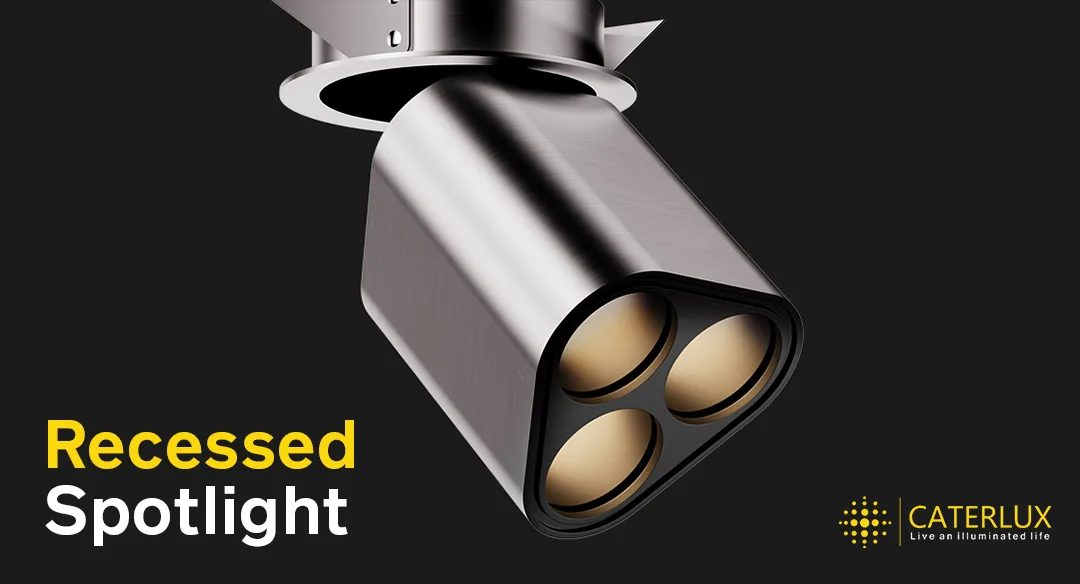
Caterlux manufactures the Vision Light – a versatile recessed spotlight available in 1-way, 2-way, and 3-way configurations. That flexibility is key because different spaces need different numbers of light sources from one fixture location.
Focused 36° Beam Angle – Vision features a 36-degree beam angle. Not too narrow, not too wide. Perfect for spotlighting displays, lighting artwork, or accenting architectural details without creating harsh circles of light.
Multiple Configurations – The 1-way version lights one specific spot. The 2-way splits into two beams aimed at different targets. The 3-way provides three separate beams from one ceiling opening. This matters in galleries, retail spaces, or homes where you need to light multiple things from one fixture location.
Refined Finishes – Available in white and brushed nickel finishes. White blends into light-colored ceilings and disappears. Brushed nickel adds a touch of sophistication in modern interiors. Both finishes are subtle enough not to distract from what the light is actually highlighting.
Built for Professional Spaces – Vision is designed for environments where lighting quality matters – offices creating professional atmospheres, galleries protecting valuable art while lighting it properly, retail spaces making products look their best. But it works just as well in homes where architectural lighting creates that elevated design feel.
As a wall spotlight LED manufacturer based in India, Caterlux understands what lighting needs to do in Indian conditions. The fixtures handle voltage fluctuations, temperature extremes, and humidity that would cause problems for imports not designed for local conditions.
Vision Light combines the flexibility of adjustable recessed spotlights with the clean installation of recessed ceiling lights. You get focused, directional lighting from fixtures that integrate seamlessly into modern interiors.
Getting Recessed Spotlights Right
Recessed spotlights give you control over lighting in ways standard downlights can’t. They focus light where you actually need it, highlight what matters, and create visual layers that make spaces more interesting to look at.
Whether you need dramatic accent lighting with narrow beams, flexible retail lighting that adapts as displays change, or architectural highlighting that showcases building features – recessed spotlights do the job that general lighting leaves undone.
The key is understanding beam angles, choosing adjustable versus fixed based on how often things move, picking the right trim for your application, and working with quality fixtures like Caterlux’s Vision Light that deliver consistent performance.
Good lighting isn’t about flooding spaces with brightness. It’s about putting light exactly where it creates the effect you want. That’s what recessed spotlights do.